Ceramic Coating Care
Ceramic Coating Maintenance: How to Protect Your Investment in Colorado
You paid $600–$2,000 for a coating that should last 2–5+ years. The wrong wash routine cuts that lifespan in half. Here's exactly how to maintain a ceramic-coated car through Colorado's UV, mag chloride, and mountain grit.
Why maintenance matters
A ceramic coating isn't a "spray it and forget it" product. It's a semi-permanent, sacrificial layer that bonds to your clear coat and takes the abuse instead of the paint. Like any protective layer, it degrades faster when neglected — and much slower when maintained correctly.
Follow the schedule below and your coating will still bead water and shrug off contaminants years from now. Skip it, and you'll be paying to strip and reapply within 12–18 months.
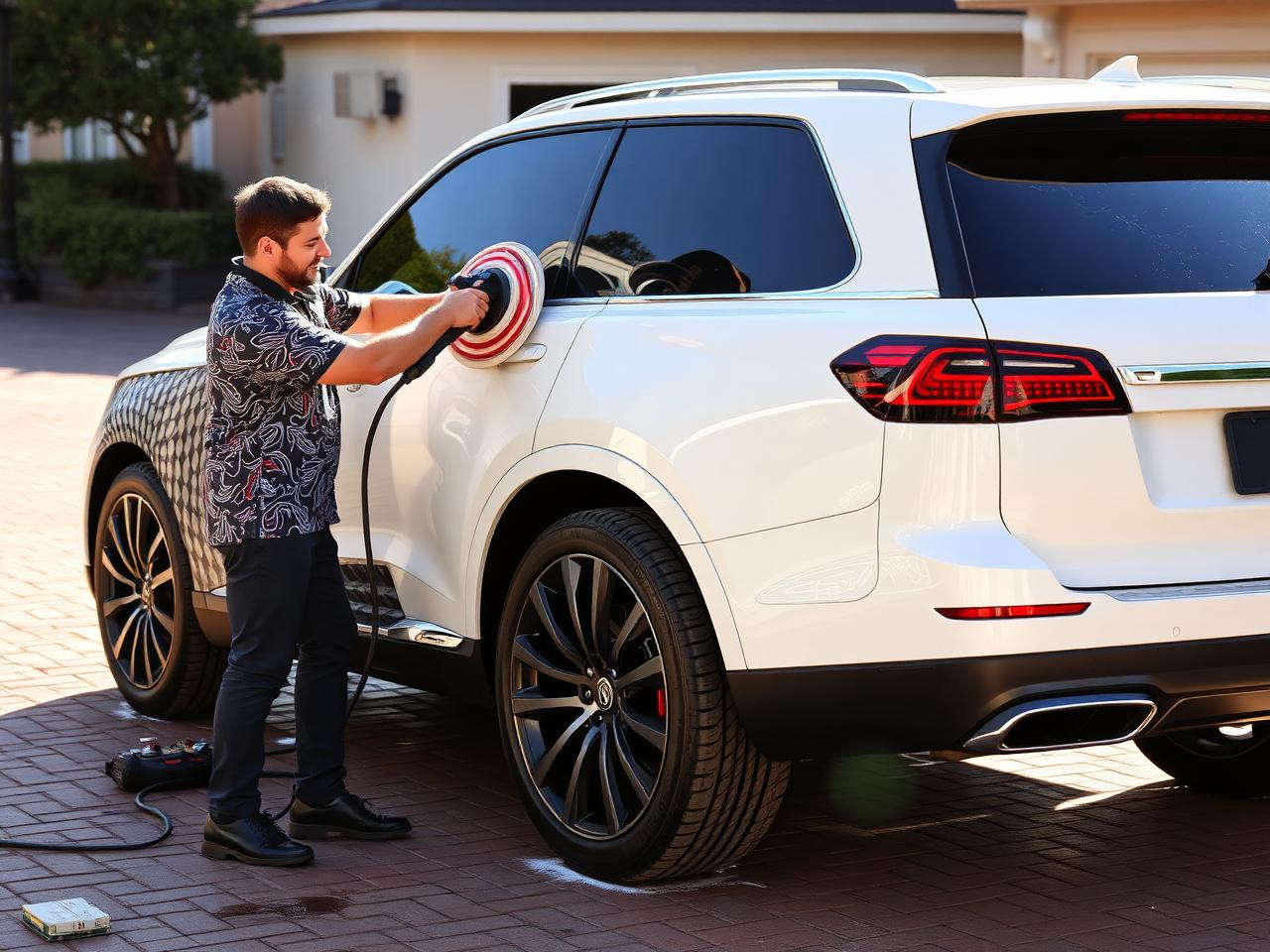
The maintenance schedule
Stick to this cadence and a quality coating will hit its full advertised lifespan.
| When | What |
|---|---|
| Every 2 weeks | Full two-bucket hand wash with pH-neutral shampoo |
| Every 2–3 months | SiO2 ceramic spray booster to refresh hydrophobics |
| Every 6 months | Iron / fallout decontamination on paint and wheels |
| Within 24–48 hours | Rinse after driving through mag chloride, brine, or heavy pollen |
| Annually | Professional inspection and top-up coat (optional) |
The correct wash technique
The two-bucket method is what keeps a coating from getting marred over time. Fifteen minutes done right beats a five-minute drive-through every week.
- 1
Rinse thoroughly
Blast off loose grit with a strong pre-rinse. In winter, focus on the lower body panels, wheel wells, and rear valance where mag chloride collects.
- 2
Foam pre-soak (optional)
A snow foam cannon with a pH-neutral shampoo lifts bonded dirt before you touch the paint. Dwell 3–5 minutes, then rinse.
- 3
Wash with two buckets
One bucket of clean soap solution, one of plain rinse water. Both with grit guards. Wash top-down in straight lines with a plush microfiber mitt — rinse the mitt in the rinse bucket between panels, never in the soap.
- 4
Rinse and dry
Rinse from the top down. Dry with a clean, plush microfiber drying towel or a filtered air blower. Water left to evaporate at 6,000 ft leaves mineral spots that etch into the coating.
- 5
Boost (as needed)
Every 2–3 months, spray a ceramic-safe SiO2 booster onto a clean, cool surface and wipe with a fresh microfiber. Restores the sheeting behavior between full maintenance details.
Colorado-specific ceramic care
Generic maintenance guides skip the stuff that actually degrades coatings on the Front Range. Here's what to watch season by season.
Winter: mag chloride is the enemy
CDOT pre-treats I-25 and Highway 105 with magnesium chloride brine before storms. It sticks to lower panels and undercarriage and slowly etches even coated paint. Rinse within 48 hours of any brine drive — a hose-only rinse is fine between full washes.
Summer: UV and water spots
At 6,000+ ft, our UV index regularly hits 8–11. Never wash in direct sun — the soap and hard water will flash-dry before you can rinse, leaving spots that bond into the coating. Wash in shade or early morning.
Spring/fall: pollen, pine sap, and bugs
Ponderosa pine sap in Monument and heavy pollen along the Front Range bond quickly. Coated paint releases them far more easily than bare clear coat — but only if you rinse within a few days. Left for weeks, even ceramic can't save the finish.
Altitude water spotting
Colorado Springs water is moderately hard. If you wash at home, dry immediately with a clean microfiber or blower. For long trips, a portable deionized rinse cartridge is worth the money on a $1,500+ coating.
- Use a pH-neutral ceramic-safe shampoo (pH 6–8)
- Rinse before you touch the paint
- Two buckets with grit guards, plush microfiber mitt
- Dry with a clean microfiber or filtered air blower
- Refresh with an SiO2 spray booster every 2–3 months
- Automatic brush/tunnel washes — they add swirl marks
- Dish soap, degreasers, or wash-and-wax products
- Wax or sealants applied over the coating
- Washing in direct summer sun
- Ignoring winter mag chloride for weeks at a time
Frequently asked questions
How often should I wash a ceramic coated car?
Every 2 weeks under normal driving, and within 24–48 hours after any drive through mag chloride, brine, or heavy pollen.
Can I take a ceramic coated car through an automatic car wash?
Touchless washes are fine occasionally. Avoid brush or friction tunnel washes — the bristles introduce swirls that dull the coating over time.
What soap should I use on a ceramic coating?
A pH-neutral, ceramic-safe car shampoo (pH 6–8). Never dish soap, degreaser, or wash-and-wax — they strip the sacrificial top layer.
How do I remove mag chloride safely?
Rinse thoroughly first, then wash with a pH-neutral shampoo. For stubborn residue on lower panels, use a dedicated salt neutralizer.
Do ceramic coated cars need to be waxed?
No. Wax blocks the hydrophobic surface. Use a ceramic-specific SiO2 spray booster every 2–3 months instead.
How long does ceramic coating last in Colorado?
2–5+ years when maintained correctly. Skipping washes or using harsh chemicals can cut that in half.
Prefer a pro to handle it?
We offer ceramic maintenance washes, decon services, and annual inspections across Monument, Colorado Springs, and the Front Range.
Not coated yet? Read our Ceramic vs. Wax guide.